Whale watching in Cabo San Lucas: guide and season
Whale watching is one of Los Cabos' most requested experiences. This complete guide helps you book with realistic expectations: season, species, sea-state reality, responsible viewing, and the difference between private and shared departures. Wildlife is never guaranteed, but good planning makes the day better.
Why Los Cabos works for whale watching
The Baja peninsula sits between the Pacific and the Gulf of California (Sea of Cortez). That geography creates productive nearshore waters where migratory whales are observed during well-documented seasonal windows–especially for humpbacks in the winter–spring period described in fisheries and research literature (for example NOAA Fisheries species overviews).
Species: humpback, gray and blue
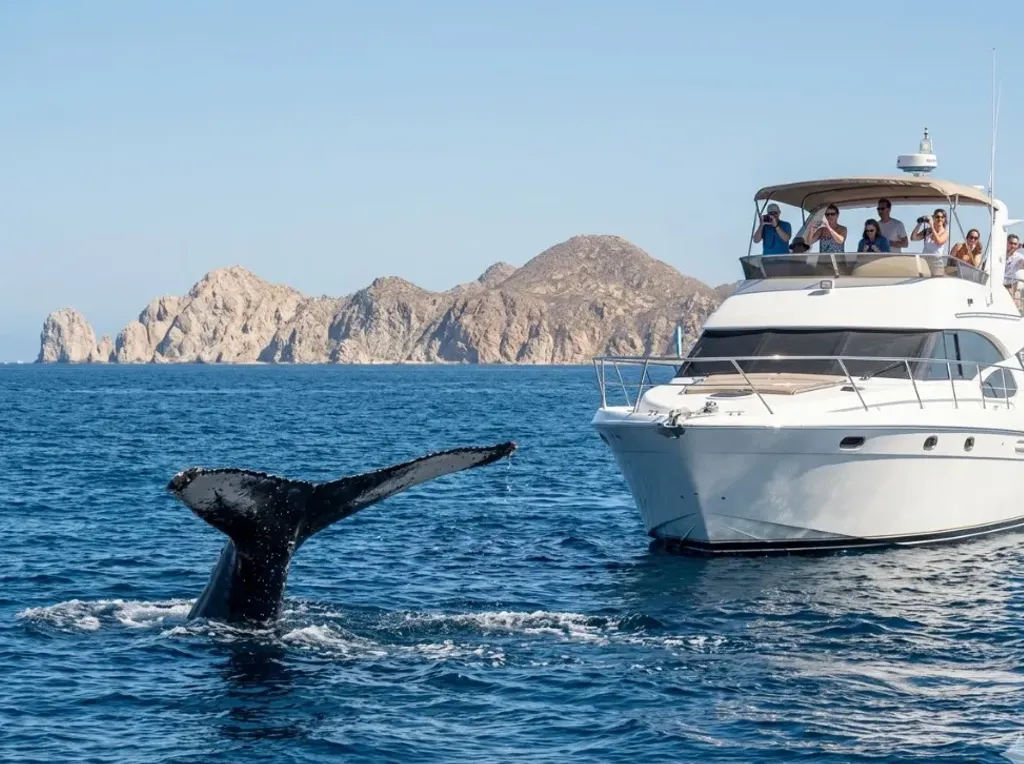
- Humpback whales: the undisputed stars of Cabo's season. They're the ones doing full breaches out of the water, pectoral-fin slaps and tail lobs — males compete this way (and with their song) during courtship. At peak season you'll spot them from the bay itself.
- Gray whales: only occasionally seen from Cabo. Their main experience is in the Pacific lagoons further north up the peninsula — San Ignacio, Ojo de Liebre and Magdalena Bay — where the famous "friendly" calf encounters happen. The lagoon experience is a different trip.
- Blue whales: the largest animal on Earth also transits the Sea of Cortez in certain windows; sightings are less frequent and depend heavily on area, dates and luck on the day.
Seasonal window and migration context
Whale season in Los Cabos runs from December through April. NOM-131-SEMARNAT-2010 does not set the dates: every year SEMARNAT announces the season length and the observation zones in the Official Gazette (DOF). For 2025-2026, the notice set December 15 to April 30 for the Cabo San Lucas, San José del Cabo and Cabo Pulmo area, with restricted zones for this activity that include the port area and a 2 km zone around El Arco; check the current dates when you book. The peak usually falls in January and February, when mothers with calves hug the coastline: humpbacks travel down from their North Pacific feeding grounds precisely to give birth and nurse in these warm waters. December opens with the first arriving groups; March–April closes with the last ones heading back north. Weather and sea state still decide what is safe and enjoyable each day.
Operational reality on the water
- Open-water conditions influence route, spacing, and observation time.
- Captains prioritize safe maneuvering over aggressive approaches.
- Best trips combine safety briefing with route flexibility.
Responsible viewing
Whale watching in Mexico is regulated by NOM-131-SEMARNAT-2010. It sets a minimum observation distance that depends on vessel size and species: 80 m for vessels of 10 m or more and 60 m for those under 10 m (120 m and 100 m, respectively, for blue and fin whales). It also allows a maximum of 4 vessels per whale or group and up to 30 minutes of observation per group, calls for approaching from the side, parallel to the animal's course, and prohibits harassing whales, forcing physical contact or swimming with them during the activity. In practice this means:
- The captain approaches slowly and parallel, and lets the whale decide — very often it's the whales that come to the boat.
- Let the captain lead approach angles and speed — safety (yours and the animal's) comes first.
- Wind, swell and the group's behavior limit the useful observation time.
Private vs shared departures
Shared: lower per-person cost, fixed timing. Private: more control over rhythm, easier for families, cameras and slower pacing, with space and comfort to observe wildlife calmly.
If you’re comparing boats for a whale-watching charter, see our Cabo yacht rental guide for prices and profiles.
Before-you-book checklist
- Confirm real duration, departure point and inclusions in writing.
- If whale watching is your #1 goal, ask how the season window fits your dates.
- Ask about weather policy and rescheduling terms.
- Verify capacity, safety gear, and boarding procedure.